A technical comparison of aluminum vs steel shower wheelchair frames — covering corrosion mechanics, real-world lifespan data, total cost of ownership, and material selection criteria for institutional buyers. Choosing the wrong frame material can cut shower wheelchair service life by 40% and double replacement costs.
Why Shower Wheelchair Frame Material Determines 40% of Your Replacement Budget
Shower wheelchairs operate in the harshest environment of any mobility device — hot water, chlorine-based disinfectants, and body fluids attack the frame every single day. Unlike a standard ward wheelchair that stays in a dry corridor, a shower chair is literally soaked multiple times daily. As detailed in our Shower Wheelchair Procurement & Safety Guide, frame material is the single largest factor in shower wheelchair lifespan — and the wrong choice turns a 5-year asset into a 2-year liability.
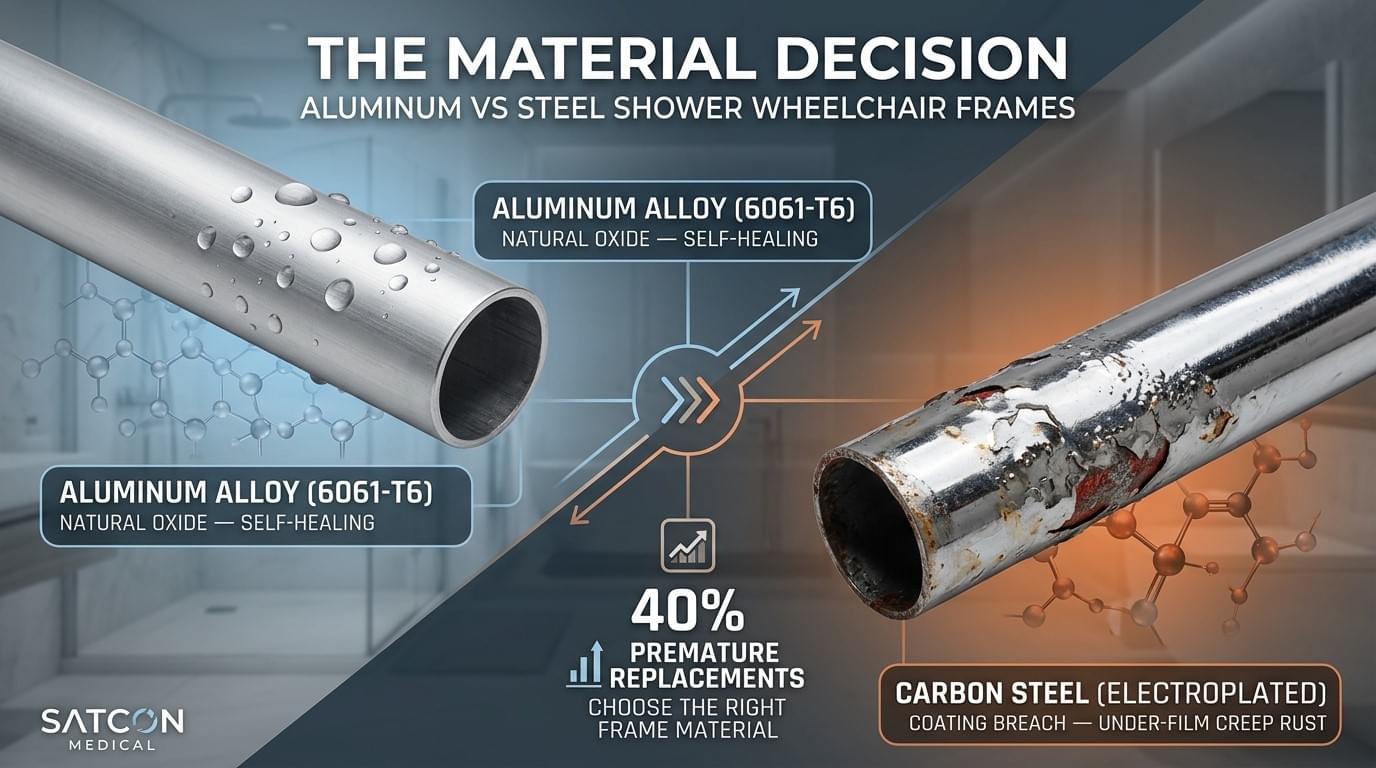
The aluminum vs steel shower wheelchair decision is not about “which is better” — it is about which material matches your facility’s reality. Aluminum offers natural corrosion resistance and lighter weight. Carbon steel (electroplated) offers higher weight capacity and lower unit cost. But in a shower environment, corrosion resistance is not a nice-to-have — it is the primary survival trait. Understanding the corrosion mechanics behind both materials is the first step to making a procurement decision your budget will thank you for.
Aluminum vs. Carbon Steel Shower Wheelchair: Side-by-Side Technical Comparison
Before diving into corrosion mechanics, here is the straight comparison of the two dominant shower wheelchair frame materials used in institutional procurement worldwide.
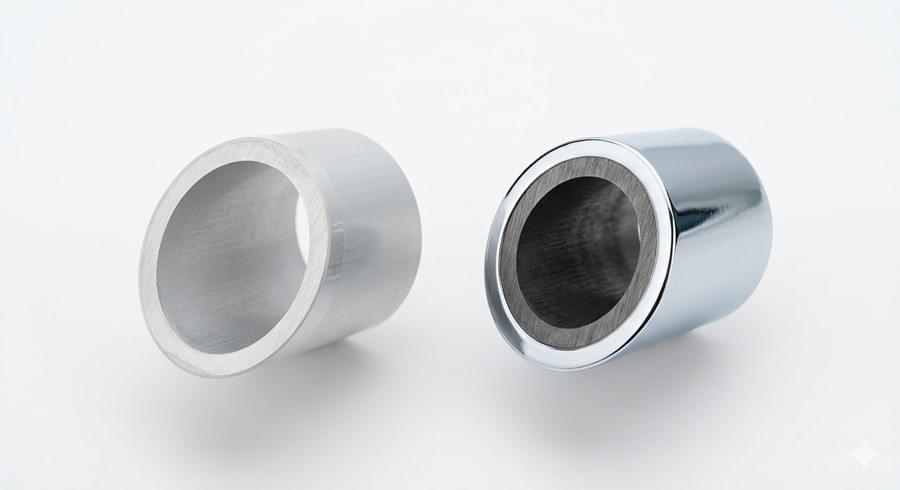
⚡ Aluminum = Lightweight Durability First
Self-healing oxide film means no coating to fail. Lighter frames reduce nurse fatigue and allow wall-mounted storage. The default choice for 70%+ of institutional shower wheelchair orders worldwide.
🔩 Carbon Steel = Weight Capacity King
130–160 kg weight capacity is the core advantage. Electroplating provides effective rust protection — until the coating is breached. Once damaged, rust spreads under the plating. The honest positioning: steel works until it doesn’t.
For most institutional fleet managers, an aluminum shower wheelchair is the lower-risk choice in wet environments. Carbon steel electroplated models serve a clear purpose — heavy-duty patients who exceed aluminum’s weight capacity — and they do that job well. The key is matching the material to the actual use case, not choosing based on unit price alone.
How Water, Disinfectant, and Body Fluids Destroy Shower Wheelchair Frames
Understanding shower chair corrosion resistance means understanding what happens at the microscopic level when a coated steel frame meets hot chlorinated water — and why aluminum’s natural defense changes the entire equation.
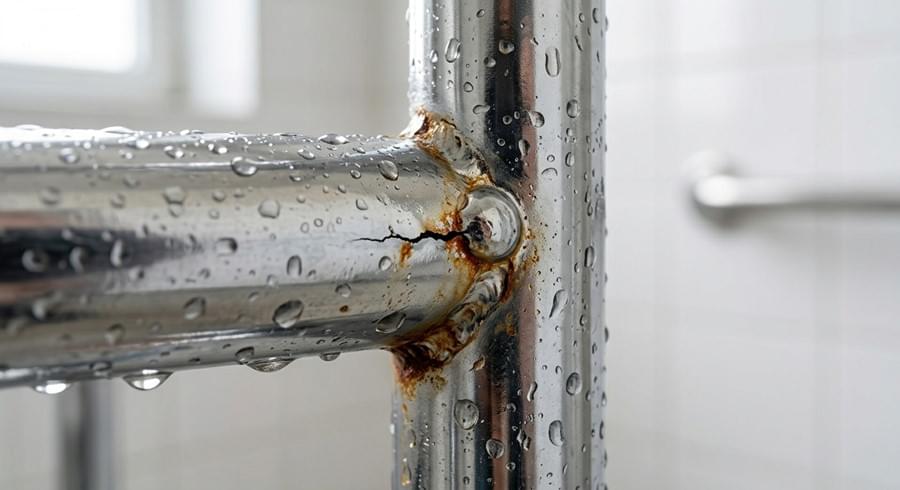
Stage 1 — Coating Breach
Micro-cracks form in the electroplated layer during manufacturing, transport, or impact. Most are invisible to the naked eye. But water molecules are smaller than any crack — they find every entry point and reach the bare steel underneath.
Stage 2 — Under-Film Creep
Once water reaches the steel substrate, electrochemical corrosion begins underneath the plating. The chrome layer above still looks intact — but rust is spreading laterally below the surface. This is the most dangerous phase: invisible, progressive, and irreversible.
Stage 3 — Surface Rust & Structural Loss
Rust eventually breaks through the surface. The plating blisters, flakes, and peels. Cross-sectional thickness decreases. Weight capacity drops. The frame is now both a safety hazard and an infection control risk — rust particles contaminate the shower environment and cannot be fully sanitized.
Why Aluminum Fights Back: The Self-Healing Oxide Film
When aluminum’s oxide layer is scratched or worn, the freshly exposed surface reacts with oxygen in the air within seconds — forming a new, continuous aluminum oxide layer. This is self-healing corrosion protection: it does not depend on an applied coating, and it works every time, everywhere on the frame. There is no “under-film creep” pathway because there is no separate coating to creep under.
Aluminum’s One Weakness: Galvanic Corrosion
Aluminum does have a corrosion vulnerability: galvanic corrosion occurs when aluminum directly contacts a dissimilar metal (typically stainless steel screws or carbon steel brackets) in the presence of an electrolyte — saline water, urine, or disinfectant residue. The solution is simple: use aluminum-compatible fasteners or add insulating nylon washers at every metal-to-metal contact point. Any reputable shower wheelchair supplier should already do this as standard practice.
Shower Wheelchair Frame TCO: When “Cheaper Upfront” Costs 2× More Over 5 Years
A carbon steel shower chair typically costs 30–40% less per unit than an aluminum equivalent. But unit price is not total cost. In a wet institutional environment, the real financial picture looks very different over a 5-year horizon.
The math is clear: a carbon steel shower chair costs 30–40% less on the purchase order but 100–200% more over 5 years. For a 50-unit fleet, that is a difference of $5,000–$14,500 in total cost — money that could fund additional equipment instead of replacing prematurely rusted units. Shower wheelchair frame durability is a financial decision, not just a clinical one.
Satcon Shower Wheelchair Frames: Aluminum Standard, Steel for Heavy-Duty
Satcon manufactures both frame materials — because different facilities have different needs. We recommend based on your actual use case, not on which option has a higher margin.
Aluminum Frame (Standard)
Default configuration for all standard shower wheelchair models. 6061-T6 marine-grade aluminum alloy with natural oxide corrosion protection. 100–130 kg weight capacity. 3–5 year wet-environment lifespan. Light enough for single-nurse maneuvering and wall-mounted storage.
Recommended for 70%+ of institutional orders
Carbon Steel Electroplated (Heavy-Duty)
Available for heavy-duty models requiring 130–160 kg weight capacity. Electroplated zinc-nickel coating + powder coat overlay for dual-layer rust protection. Heavier frame provides enhanced stability for bariatric patients. Requires regular coating inspection per maintenance schedule.
Recommended when weight capacity is the priority
Custom & OEM Options
Client-specified wall thickness, coating system, or hybrid material configurations. Brand labeling, custom color finishes, and client-specific compliance documentation. Mixed-material orders (aluminum standard fleet + steel heavy-duty units) available in a single shipment.
Aluminum or Steel Shower Wheelchair? 4 Questions to Ask Before You Order
Stop guessing. Answer these four questions honestly, and the material choice becomes obvious.
1. Average Patient Weight?
Routinely under 130 kg → aluminum handles the load with a lighter, corrosion-proof frame. Frequently over 130 kg → carbon steel heavy-duty is the structurally appropriate choice, and the electroplated coating is a worthwhile trade-off for the weight capacity you need.
2. Shower Environment Type?
Daily hot water immersion + chlorine disinfectant between patients → aluminum’s self-healing oxide film is the clear winner. Low-frequency shower use in a rehabilitation center → carbon steel’s shorter wet-exposure lifespan may be acceptable.
3. Staff Strength & Storage?
Predominantly female nursing teams + wall-mounted storage racks → aluminum’s 8–12 kg frame weight makes daily lifting realistic. Male-orderly teams + floor storage → steel’s 12–18 kg weight is manageable, and the heavier frame adds stability.
4. Budget Horizon?
This year’s procurement budget only → carbon steel’s lower unit price fits. Three-to-five year TCO perspective → aluminum costs 40–60% less in total. Most institutional finance departments require TCO analysis — if yours does, aluminum wins decisively.
Two materials, two real use cases, one principle: match the material to the environment, not the price tag. The cheapest shower wheelchair is the one you buy once and use for five years — not the one you buy cheaply and replace twice.
Need Expert Guidance on Shower Wheelchair Material Selection?
Tell us your patient weight range, shower frequency, and budget horizon. We’ll recommend the right frame material — even if it’s not the more expensive option.
Frequently Asked Questions
Which is better for a shower wheelchair: aluminum or steel?
Neither is universally “better.” Aluminum offers superior corrosion resistance and lighter weight, making it the default choice for wet environments. Carbon steel (electroplated) offers higher weight capacity (130–160 kg), making it necessary for bariatric patients. The right choice depends on your patient population, shower frequency, and budget horizon.
How long does an aluminum shower wheelchair last in a hospital?
In a typical institutional shower environment with daily hot water exposure and chlorine-based disinfection, an aluminum shower wheelchair frame lasts 3–5 years. Aluminum’s natural oxide film self-heals when scratched, so there is no coating to degrade — the frame remains structurally sound throughout its service life.
Does an electroplated steel shower wheelchair rust?
Yes — once the electroplated coating is breached. Micro-cracks from manufacturing, impact during use, or abrasion from cleaning tools create pathways for water to reach the bare steel underneath. Rust then spreads under the plating (under-film creep), eventually causing the coating to blister and peel. Regular coating inspection and immediate touch-up of any visible damage can extend service life.
Can I order both aluminum and steel shower wheelchairs from the same supplier?
Yes. Many facilities run a mixed fleet — aluminum units for standard-weight patients and carbon steel heavy-duty units for bariatric patients. Satcon manufactures both frame types and ships mixed-material orders in a single container. This simplifies procurement, consolidates quality documentation, and ensures consistent after-sales support across your entire fleet.