When it comes to electric wheelchairs, safety is never optional — it’s essential. Among all the engineering components, the electric wheelchair braking system plays one of the most critical roles in ensuring user security, control, and stability. Whether it’s navigating slopes, maneuvering indoors, or responding to a sudden stop, the reliability of the brake defines user confidence and overall comfort.
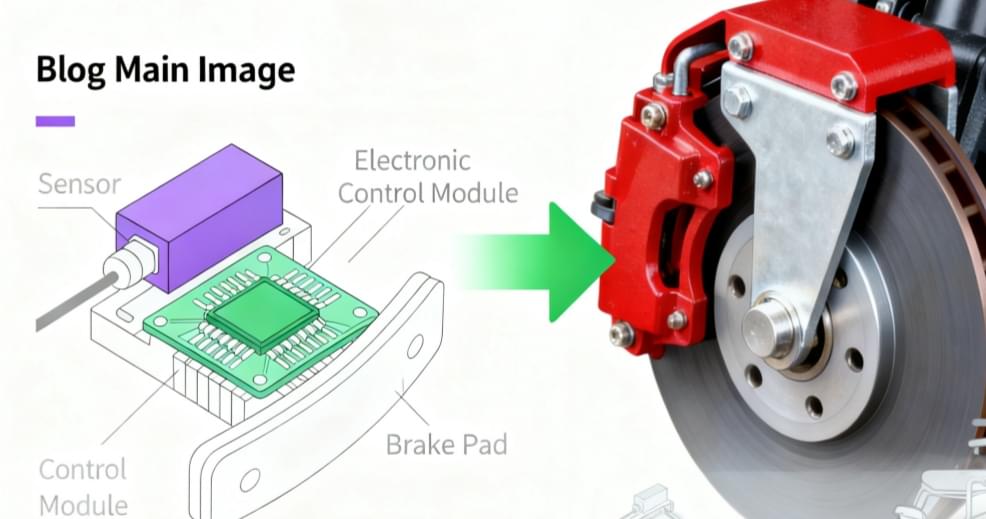
In today’s mobility market, most electric wheelchairs use one of two advanced braking technologies: the electromagnetic brake wheelchair and the electronic brake wheelchair, also known as the EABS wheelchair (Electronic Automatic Braking System). Each braking type offers unique advantages depending on user needs, environment, and cost considerations.
This guide explores how the EABS wheelchair braking system operates, compares its performance with traditional electromagnetic systems, and helps you determine which braking solution best fits your users or business — whether for hospital applications, rehabilitation centers, or wholesale distribution.
⚙️ 1. Electromagnetic Braking — The Trusted Safety Standard
Electromagnetic braking is widely recognized as the safest and most reliable braking solution for modern medical wheelchairs. It operates using magnetic induction to automatically lock the motor when the user releases the joystick or when the power supply is interrupted.
Even in emergencies—such as power failure or steep slopes—the electromagnetic brake immediately engages, preventing the wheelchair from rolling away.
✅ Key Advantages
- Fail-safe protection: Automatically locks the wheels during power loss or controller release.
- Energy-efficient: Once activated, it doesn’t require continuous electricity.
- Highly reliable: Performs consistently in hospitals, rehabilitation centers, and outdoor conditions.
⚠️ Considerations
The system’s structure is more complex and comes with a slightly higher production cost, but the trade-off is exceptional stability and user safety.
💡 Best suited for: Elderly users, hospital wheelchairs, or outdoor models operating on uneven terrain.
🔋 2. Electronic Braking (EABS) — Fast, Lightweight, and Economical
The Electronic Brake Wheelchair, also known as EABS (Electronic Assisted Braking System), is a more compact and responsive technology designed for modern mobility needs. Instead of locking the motor mechanically, the electronic brake wheelchair uses intelligent electronic control to regulate motor torque, allowing the wheelchair to decelerate smoothly and safely.
This advanced braking system is especially popular in lightweight and budget-friendly electric wheelchair models, offering a strong balance between cost, performance, and user comfort. It’s ideal for indoor use or flat terrain, providing a seamless and quiet braking experience for everyday mobility.
🚗 See our Electric Wheelchairs for indoor use
✅ Key Advantages
- Quick response: Smooth and controlled braking with minimal mechanical friction.
- Lightweight structure: Ideal for compact and foldable wheelchair designs.
- Cost-effective: Lower production and maintenance costs.
⚠️ Limitations
Because EABS depends on electric current, it loses braking force during power loss or a low battery. Therefore, a manual emergency brake is essential for added safety.
💡 Best suited for: Indoor environments, short-distance mobility, and users looking for a lighter, more affordable option.
🧩 3. How to Choose the Right Braking System
Selecting the correct braking technology depends on several factors: user condition, typical terrain, and overall product positioning.
| Criteria | Recommended Brake Type | Why |
| Outdoor & Sloped Terrain | Electromagnetic Brake | Provides automatic wheel lock on inclines |
| Flat Indoor Surfaces | Electronic Brake | Offers smooth, low-cost braking control |
| Elderly or Disabled Users | Electromagnetic Brake | Higher safety and reliability |
| Portable or Lightweight Models | Electronic Brake | Reduces weight and simplifies design |
🛠️ Expert Tip:
Perform a braking system inspection every six months—checking the coil, controller response, and mechanical integrity ensures consistent safety performance.
Check out our Portable or Lightweight Electric Wheelchair Models
🚀 4. Future Development — The Rise of Dual Safety Systems
As electric wheelchair technology advances, many premium models are now equipped with dual braking systems, which combine the strengths of both electromagnetic and electronic brakes.
This hybrid design enables electronic smooth control during normal operation and automatic mechanical locking during emergency stops or power failures. The result is an even safer, more adaptive wheelchair system ready for diverse global terrains.
In the near future, integration with intelligent sensors and AI control algorithms will make braking responses predictive—anticipating motion and adjusting automatically to the user’s environment.
🏁 5. Safety Beyond Technology — Satcon Medical’s Commitment
At Satcon Medical, we believe safety is more than a feature—it’s a promise.
As a certified electric wheelchair manufacturer (CE, FDA, ISO 13485), we design every model with advanced braking technologies to meet the highest international standards.
Our R&D engineers continuously improve control systems, braking precision, and comfort, ensuring that users experience not only mobility but peace of mind.
📞 Need a custom braking solution?
Get in touch with our technical team for OEM & ODM electric wheelchair designs tailored to your market needs.
Looking for the most reliable electric wheelchair solutions for your clinic, hospital, or senior care facility? Explore our comprehensive Electric Wheelchair Purchase Guide for professional buyers.
📌 Looking for the most reliable and efficient electric wheelchair solutions for your clinic, hospital, or senior care facility?
📘 Our comprehensive Electric Wheelchair Purchase Guide covers all the key factors professional buyers need to consider, including:
- ⚙️ Frame structure
- 🔋 Motor types
- 🛑 Braking systems
- 💺 Seat ergonomics
- 🛡️ Safety features
This guide helps you make informed purchasing decisions for your facility.