Choosing the core material for your electric wheelchairs isn’t just a technical spec—it’s a fundamental business decision. The frame you select directly impacts your bottom line and brand reputation, whether you’re supplying hospitals, government tenders, distributors, or retail networks.
The right material dictates:
⚙️ Long-Term Product Durability & Stability
🛡️ End-User Safety & Comfort
🏷️ Your Competitive Market Positioning
🚛 Shipping & Logistics Costs
🔧 Maintenance Demands & After-Sales Cost
💼 Overall Channel Profitability
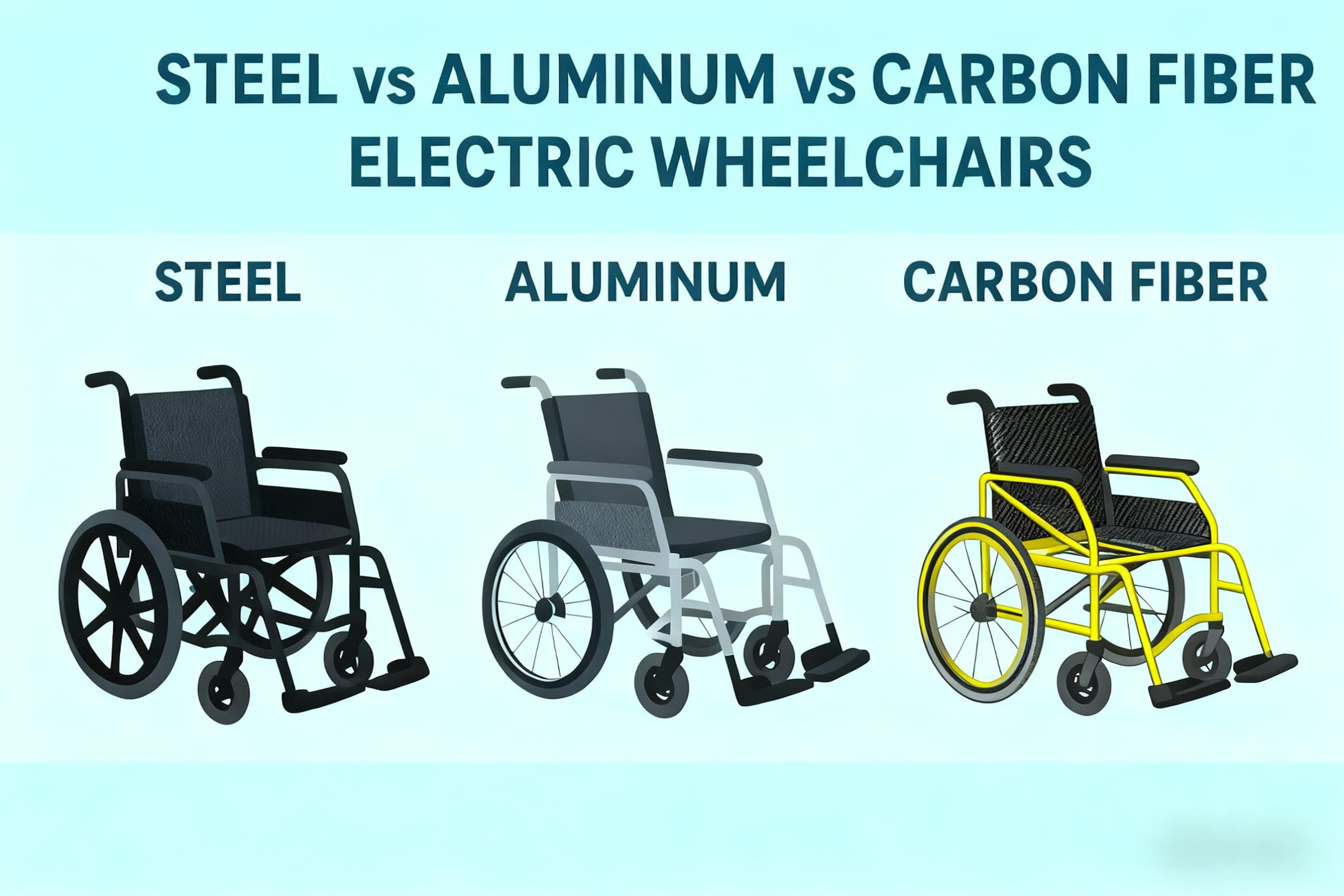
The industry currently revolves around three main materials: Steel, Aluminum Alloy, and Carbon Fiber.
Each offers distinct advantages, but their limitations are often overlooked in the sourcing process, leading to unexpected long-term costs.
This guide provides a clear, business-focused comparison to help you select the material that best aligns with your target market, sourcing strategy, and profitability goals.
1. Why Electric Wheelchair Material Selection Defines Your Market Competitiveness
In the B2B electric wheelchair sourcing landscape, material choice is the single biggest factor shaping your product’s commercial success. It goes beyond specifications to define your wheelchair durability, brand promise, and ultimately, your market position.
Data from thousands of electric wheelchair procurement cases confirms that the wheelchair frame material directly influences:
30–45% of the total electric wheelchair manufacturing cost
60–70% of the structural stability & load capacity
80% of the long-term durability & failure rate
For a B2B buyer, these technical metrics translate into critical business advantages:
✅ Reduced warranty claims for heavy-duty electric wheelchairs
✅ Extended electric wheelchair lifespan and product reliability
✅ Lower lifetime maintenance costs for fleet operators
✅ Superior ROI on hospital-grade wheelchairs and government contracts
✅ Higher profit margins on lightweight electric wheelchair models
✅ Predictable total cost of ownership for nursing homes and distributors
Globally, markets in North America, Europe, and the Middle East are increasingly driven by informed buyers. End-users—from medical wheelchair providers to individual retailers—now prioritize safety and durability and recognize the value of premium materials.
Electric wheelchair frame material = Core business value. This is the established consensus for any profitable and sustainable sourcing strategy.
2. Electric Wheelchair Materials: A Clear Comparative Overview
The frame material defines the performance of an electric wheelchair—impacting strength, durability, maintenance cost, shipping efficiency, and overall value for bulk procurement. Understanding how each material performs helps B2B buyers choose the right solution for hospitals, distributors, government tenders, and mobility retailers.
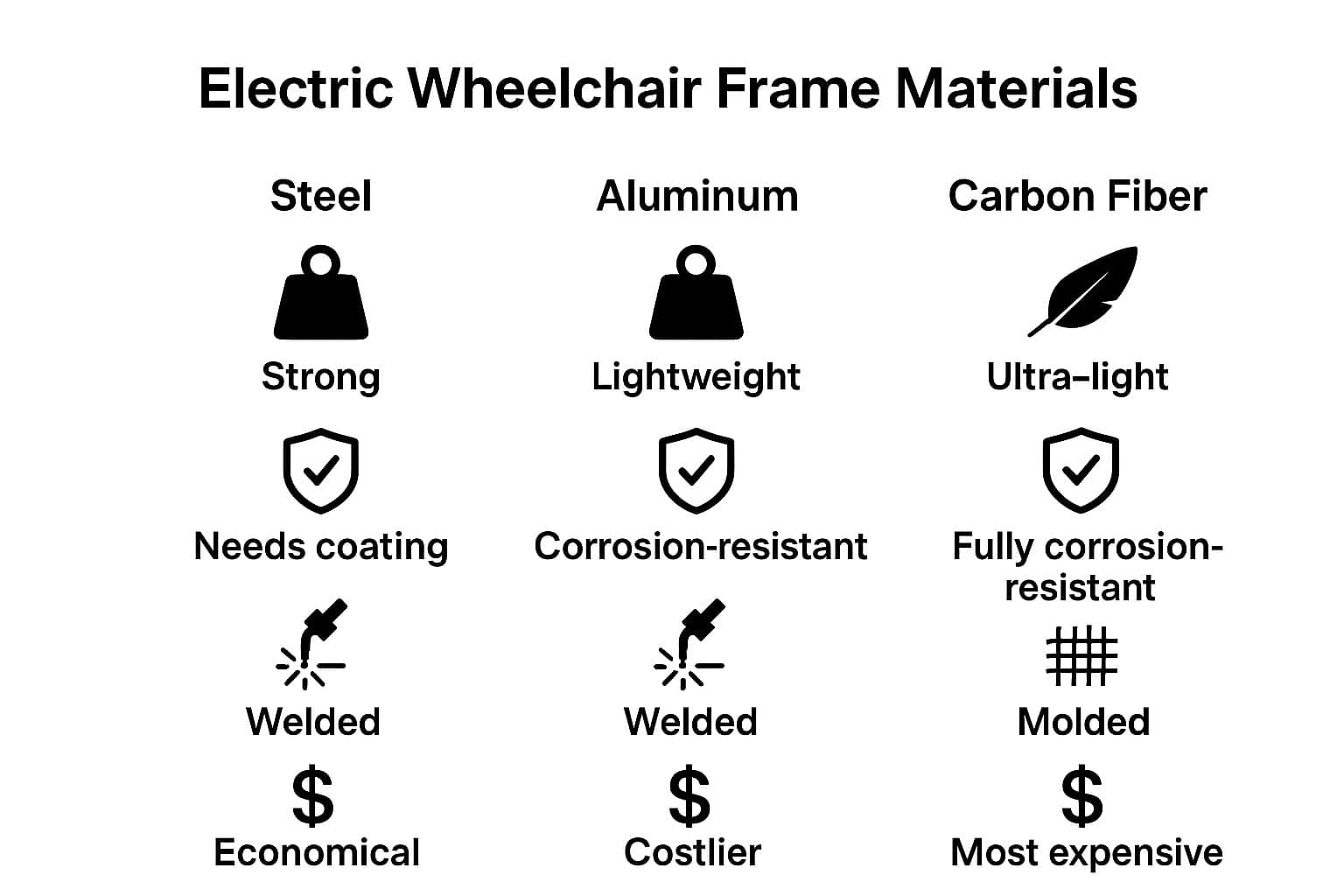
🛡️ Steel: The Heavy-Duty, Institutional Standard
Steel frames remain the go-to choice for hospital-grade and heavy-duty electric wheelchairs, thanks to their strength and cost efficiency.
Key Advantages
- ⚙️ High structural rigidity
- 🏋️ Excellent load-bearing capacity (ideal for bariatric users)
- 🔨 Consistent welding quality in mass production
- 💰 Most economical option for bulk orders
- 🔧 Repairs are simple and low-cost
Limitations
- ⚖️ Heavier, less caregiver-friendly
- 🛡️ Needs anti-corrosion treatment
- 🚛 Higher logistics cost due to weight
Best For
Hospitals · Care facilities · Government tenders · Rental fleets · Markets prioritizing durability
🌱 Aluminum Alloy: Lightweight, Practical, and Market-Friendly
Aluminum offers the best balance between strength and portability, making it the top choice for mainstream and premium electric wheelchair markets.
Key Advantages
- 🪶 20–35% lighter than steel
- 🌊 Naturally corrosion-resistant (ideal for humid/coastal regions)
- 📦 Easy to fold, store, and transport
- 🔧 Minimal rust-related maintenance
Limitations
- 💰 Higher cost compared to steel
- 🏭 Welding quality varies by manufacturer
- 🔧 Repairs require trained technicians
🚀 Carbon Fiber: Ultra-Light, Premium, and High-Performance
Best For
Retail distribution · Home care · Foldable travel models · Urban mobility
Carbon fiber frames represent the premium tier of electric wheelchairs, combining high strength with unmatched portability.
Key Advantages
- 🪶 Market’s lightest frames (15–22 kg)
- 🌊 Fully corrosion-resistant
- ✈️ Optimized for air travel and transport
- 💰 High-end appearance supports premium pricing
Limitations
- 💸 Highest production and procurement cost
- 🔧 Requires specialized repair services
- 🎨 Limited customization flexibility
Best For
Premium retailers · Airline mobility programs · High-end distributors (US/EU/AU) · Private hospitals
3. Structural Strength & Durability: Which Electric Wheelchair Material Performs Best?
| Material | Rating | Notes |
|---|---|---|
| Steel | ★★★★★ | Best load capacity, most stable |
| Aluminum | ★★★★☆ | Excellent for most users |
| Carbon Fiber | ★★★★☆ | Very strong but impact-sensitive |
In B2B electric wheelchair procurement, the frame material is a critical factor that determines longevity, load-bearing capacity, maintenance cost, and production consistency. Steel, aluminum alloy, and carbon fiber each have unique advantages. Choosing the right material directly impacts your ROI and long-term supplier reliability.
3.1 Steel Electric Wheelchairs
Steel frames offer stable welding performance, ensuring consistent quality across large production batches. Their high load-bearing capacity makes them ideal for hospital electric wheelchairs, nursing home mobility solutions, government procurement projects, and heavy-duty electric wheelchairs. Steel models have been tested under industry-standard durability assessments, including folding cycles, slope braking, and vibration simulations, proving their reliability in high-intensity use. Repairs are straightforward, parts are widely available, and long-term maintenance costs are low, making steel the preferred choice for high-volume, heavy-duty applications.
👉 Explore our durable steel-frame models:
Steel Electric Wheelchair Series
3.2 Aluminum Electric Wheelchairs
Aluminum alloy is lightweight, making it ideal for foldable, portable electric wheelchairs and home care settings. Production quality depends on precise TIG welding, so selecting a supplier with strict quality control is essential. Aluminum wheelchairs excel in daily urban use and moderate outdoor environments, providing a balance of durability, corrosion resistance, and user convenience. They are well-suited for retail distribution and home-care B2B markets.
👉 See our best-selling aluminum models:
Lightweight Aluminum Electric Wheelchair Series
3.3 Carbon Fiber Electric Wheelchairs
Carbon fiber frames are molded, providing highly consistent frame strength and corrosion resistance. They are extremely light, ideal for premium lightweight electric wheelchairs, airline mobility programs, and high-end retail markets. However, carbon fiber is less impact-resistant under heavy loads, repair requires specialists, and customization options are limited. Carbon fiber products are best for buyers seeking ultra-portable, luxury electric wheelchairs and are willing to invest in high-value solutions.
👉 Check our premium lineup:
Carbon Fiber Electric Wheelchair Series
3.4 Summary
For B2B buyers, the choice of frame material should consider production stability, durability, usage environment, and target customer segment:
Steel: Most durable, ideal for heavy-duty and institutional procurement
Aluminum: Lightweight, reliable, suitable for retail and home care
Carbon Fiber: Ultra-light, corrosion-resistant, premium market focus
📘 Additional Expert Guides
For buyers, distributors, and tender specialists looking for more detailed information, you may also find these helpful:
🔗 How to Choose an Electric Wheelchair
🔋 Electric Wheelchair Battery Guide
🌍 Import Electric Wheelchairs Guide
4. Weight Impact: User Comfort and Logistics Efficiency for Electric Wheelchairs
The weight of an electric wheelchair significantly affects both end-user experience and bulk shipping costs. Understanding how frame material influences weight helps B2B buyers make smarter procurement decisions.
Typical Electric Wheelchair Weight by Material
Steel frames: 38–48 kg
Aluminum frames: 25–32 kg
Carbon fiber frames: 15–22 kg
Impact on Users
Lighter electric wheelchairs provide tangible benefits for caregivers and users:
⚖️ Easier lifting and handling for family members or home-care staff
🧓 Improved mobility and independence for elderly or physically limited users
✈️ More travel-friendly, suitable for air travel or moving between locations
🏪 Higher acceptance in retail markets due to ease of use
Impact on Logistics
Reducing wheelchair weight also improves shipping efficiency and lowers costs:
💸 Lower air freight costs
📦 Reduced container CBM (volume) charges
🚛 Lower overland distribution expenses
Aluminum and carbon fiber electric wheelchairs, being significantly lighter than steel models, are especially advantageous for long-distance exports to regions such as Europe, the USA, Africa, and Oceania, providing both cost savings and faster delivery for bulk B2B orders
5. Cost Structure and FOB Price Comparison for Electric Wheelchairs
Understanding the cost breakdown and FOB prices is crucial for B2B buyers evaluating bulk procurement. Frame material heavily influences both unit cost and profit margins.
Typical FOB Price Range (China, Industry Average)
Steel frames: USD 240–380
Aluminum frames: USD 420–650
Carbon fiber frames: USD 900–1,600
Bulk Procurement Insights
Steel: Best value for institutional projects such as hospitals, care facilities, and government tenders
Aluminum: Strongest seller in consumer and retail markets due to portability and aesthetics
Carbon fiber: Most profitable for premium channels, offering high-end positioning
OEM/ODM Flexibility
Steel: Easiest for structural modifications and custom designs
Aluminum: Flexible for cosmetic changes such as color, shape, and finish
Carbon fiber: High tooling cost limits customization, best suited for luxury or niche markets
6. Motor Pairing: Material, Power, and Efficiency
The right motor pairing with frame material ensures optimal efficiency, longer battery life, safety, and reduced maintenance costs.
Material Recommended Motor Logic
Steel 250–350W high-torque Handles heavy users and slopes efficiently
Aluminum 180–250W brushless Balanced performance and energy use
Carbon Fiber 150–200W ultra-light motor Prioritizes portability and lightweight design
Proper motor selection is essential for bulk buyers to guarantee consistent performance and safety across different markets.
7. Corrosion Resistance by Regional Climate
Different electric wheelchair frame materials react differently to environmental conditions—a critical factor for international B2B procurement. Choosing the right material for the climate helps reduce maintenance costs, extend product lifespan, and enhance end-user satisfaction.
💧 High Humidity Regions (Southeast Asia, Middle East)
- Steel: Requires extra rust protection, such as powder coating or electrophoresis
- Aluminum: Excellent natural corrosion resistance
- Carbon Fiber: Fully corrosion-resistant
❄️ Cold / Snowy Climates
- Aluminum & Carbon Fiber: Perform best, maintaining integrity under freezing temperatures
- Steel: Needs specialized surface coating to prevent rust
🌊 Coastal Regions (Salt Exposure)
- Aluminum & Carbon Fiber: Superior resistance to salt and corrosion
- Steel: More prone to rust without proper treatment
✅ B2B Procurement Insight: Selecting frame materials based on regional climate ensures long-lasting performance, lower maintenance costs, and satisfied end-users, especially for bulk electric wheelchair orders.
8. Conclusion
Choosing the right frame material is key to building a reliable and competitive electric wheelchair lineup. Steel provides strength for hospital electric wheelchairs, aluminum balances portability and durability for foldable electric wheelchairs, and carbon fiber offers premium performance for high-end or premium electric wheelchairs.
For distributors and healthcare buyers, working with a trusted electric wheelchair manufacturer or electric wheelchair supplier ensures better value in electric wheelchair bulk orders, lower maintenance costs, and higher end-user satisfaction.
The right material — paired with the right partner — helps you deliver safer, smarter, and more profitable mobility solutions worldwide.
For professional buyers and bulk procurement managers seeking a complete guide on electric wheelchair selection—including frame, motor, battery, and safety features—check our How to Choose the Right Electric Wheelchair for Your Needs: A Comprehensive Purchase Guide .